
Our Lady of the Rocks History: The Legend, the Church and Fašinada
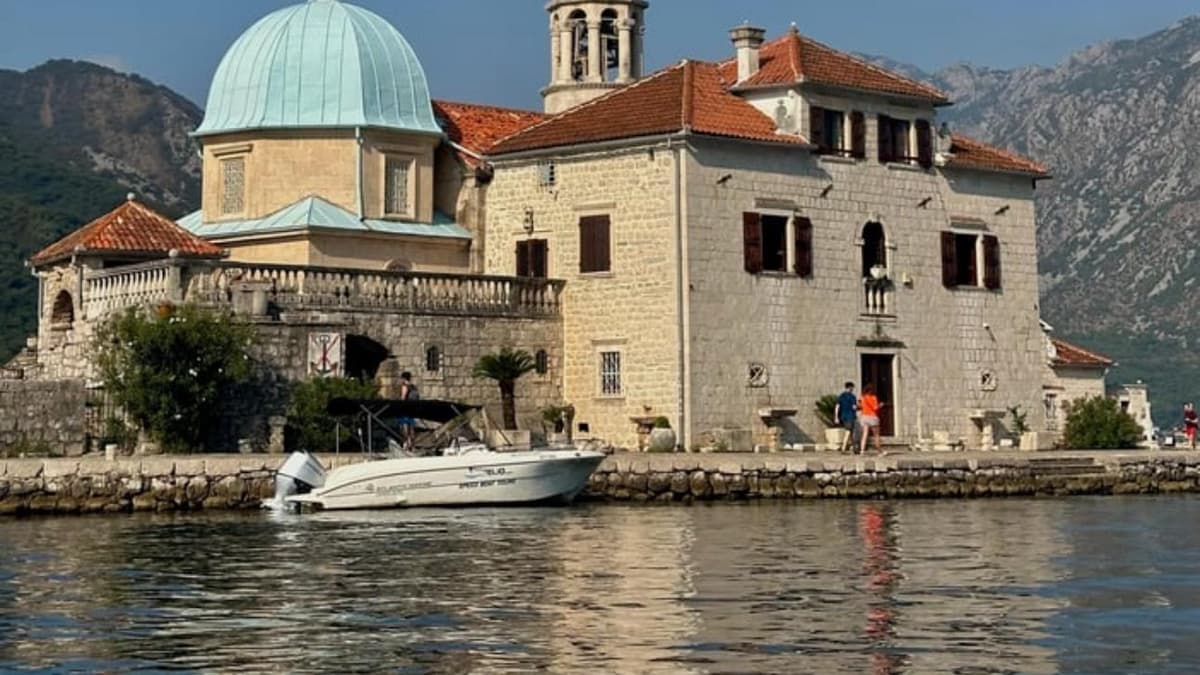 Island churchFrom €45
Our Lady of the Rocks is reader-supported. When you book through our GetYourGuide links we may earn a commission, at no extra cost to you.
Our Lady of the Rocks (Gospa od Škrpjela) is a man-made islet in the Bay of Kotor, built by the seafarers of Perast. Tradition says sailors found an icon of the Madonna and Child on a sea rock on 22 July 1452. Over the following centuries locals dropped stones and sank old ships around that rock until there was enough land for a church. The present church dates mainly from the 1630s, with an 18th-century renovation. Every 22 July the people of Perast still row out at sunset to throw more stones into the sea. The custom is called Fašinada.
This page tells the story in order: the legend, how the islet was built, the church and its art, the votive treasures, the famous embroidery, and the living tradition. For the practical side of a visit, see how to get to Our Lady of the Rocks and the complete visitor guide.
Timeline at a glance
| Date | Event |
|---|---|
| 22 July 1452 | According to tradition, seamen from Perast find an icon of the Madonna and Child on a rock in the bay |
| c. 1452 | Lovro Dobričević of Kotor paints the icon of Our Lady of the Rocks now venerated in the church |
| 15th century | Stones and sunken ships slowly build up the islet; a first small chapel stands on it |
| 1420–1797 | Perast and the Bay of Kotor are part of the Venetian state, and Perast’s fleet and captains prosper |
| 1624 | A raid on Perast damages the earlier church |
| 1630s | The present church is built in its current form |
| 1654 | Perast fights off an Ottoman attack, a defining moment in its history |
| Late 17th–early 18th century | Tripo Kokolja of Perast paints the 68 canvases in the church |
| 1722 | The church is renovated |
| 1979 | The Natural and Culturo-Historical Region of Kotor, including Perast, becomes a UNESCO World Heritage Site |
| 2013 | Fašinada is declared part of Montenegro’s intangible cultural heritage |
The legend of 1452
The founding story is short and has been told in Perast for more than 500 years. On 22 July 1452, two sailors returning to Perast spotted an icon of the Virgin Mary with the Christ Child lying on a rock that barely broke the surface, near the islet of St George. Local tradition names them as the Mortešić brothers. One of them had been injured. In the most common version, he was healed after the discovery. The brothers vowed to build a church where the icon had been found.
The story fits the world it came from. Perast was a town of sea captains and crews who faced storms, pirates and long voyages. A shrine to the Virgin who had “appeared” on a rock at their own doorstep became the spiritual centre of that seafaring life. That is why so much of what you see inside the church is about ships and sailors.
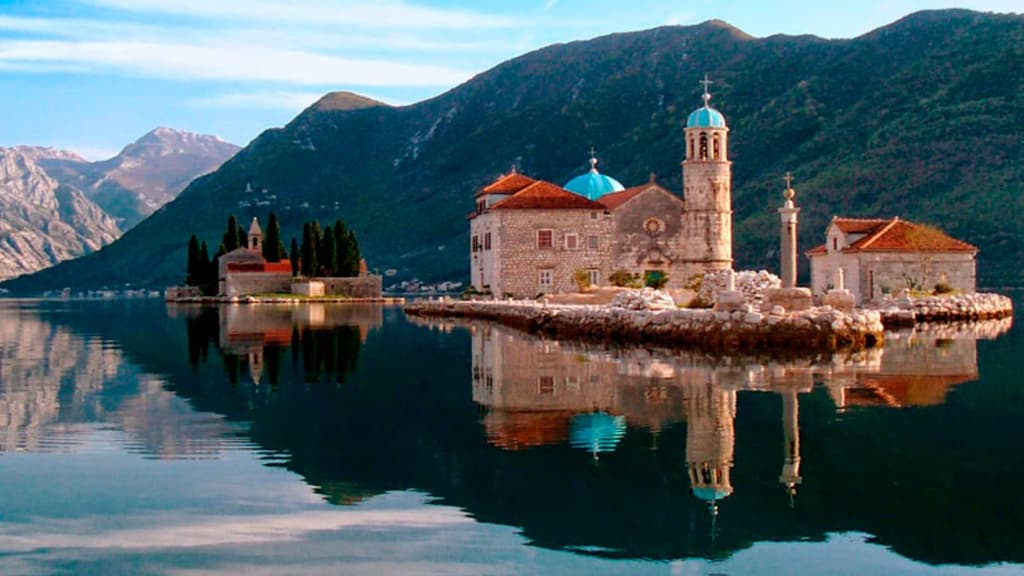 The two isletsFrom €53
Building an island by hand
A single rock does not hold a church. To make one possible, the people of Perast began taking stones out to the reef and dropping them into the sea. Returning sailors added their own as a vow of thanks. Old and captured ships were loaded with rocks and deliberately sunk around the reef to speed things up. Over generations the pile broke the surface, and the artificial islet slowly grew to its present size of a little over 3,000 square metres.
That act of building is still remembered every year in Fašinada (see below). It is one reason the islet means more to locals than its size would suggest. In a very literal sense, the community made the ground the church stands on.
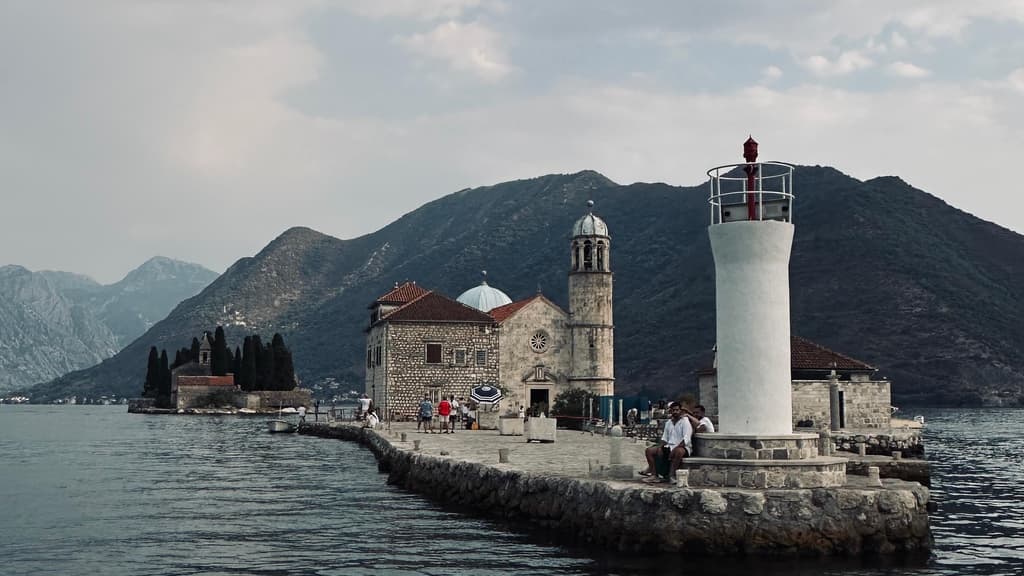 Island churchFrom €324
Stand on the stone jetty and look down: the ground beneath your feet was carried out here stone by stone, by boat, over generations. The little lighthouse keeps watch at the water’s edge, and across the channel the cypresses of St George stand dark and still. A private boat tour from Perast lets you linger here at your own pace.
The church you see today
A first small chapel stood on the islet in the 15th century. Perast suffered a destructive raid in 1624, and the church was rebuilt in the 1630s (the date usually given is 1632), under Venetian rule. That is essentially the building you visit now. It was renovated again in 1722. The result is a compact Baroque church with an octagonal blue dome and a round bell tower, a Venetian-style silhouette that has become one of the best-known images of Montenegro.
Inside: the icon and the high altar
The focus of the interior is the icon of Our Lady of the Rocks, attributed to Lovro Dobričević, a 15th-century painter from Kotor. It is set into a marble high altar, made in the late 18th century by an Italian sculptor. People still pray before the icon, and it is carried in procession on feast days.
Tripo Kokolja’s paintings
The walls and ceiling are covered with 68 oil paintings by Tripo Kokolja (1661–1713), a Baroque painter from Perast. They show scenes from the life of the Virgin, prophets and sibyls, and the four evangelists. The most important single work is his large Death of the Virgin, about ten metres long. Few small churches anywhere hold a body of work this complete by one local artist.
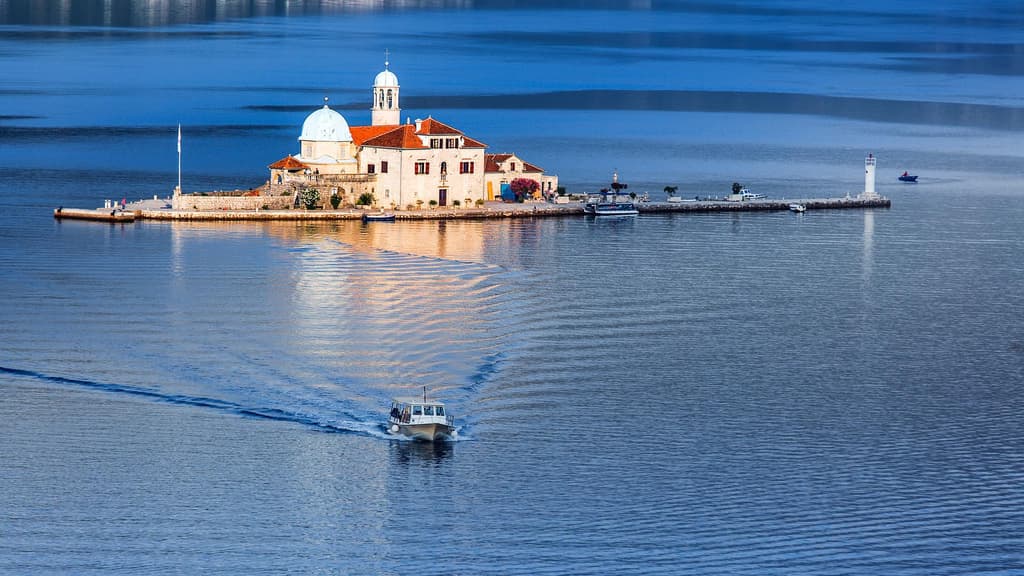 Island churchFrom €52
The votive treasures
What most visitors remember is the silver. The walls are hung with silver votive plates, more than 2,000 by the count usually given by guides. Families gave them in thanks for a sailor who came home, for recovery from illness, or as a plea for protection. Many plates show ships. Others are shaped like the part of the body that needed healing.
The church also holds a large collection of painted votive pictures of ships, often caught in storms or fighting pirates. They were commissioned by captains and crews who believed they had been saved by the Virgin’s intercession. Taken together, they are a remarkable record of Perast’s maritime world from the 17th to the 19th century: ship types, flags, rigging and even the names of vessels.
The embroidery of Jacinta Kunić-Mijović
The most moving object in the museum is a small embroidered icon. According to the story, Jacinta Kunić-Mijović of Perast embroidered it over 25 years while waiting for her husband to return from the sea. She used silk, gold and silver thread and, eventually, strands of her own hair. Guides point out that the hair in the angels’ heads turns from brown to grey as the years pass. Tradition adds that she lost her sight before it was finished. Whatever details time has added, the piece is a genuine 19th-century work and the emotional centre of most guided visits.
The museum upstairs
Above the church, a small museum holds more of Perast’s history. It contains archaeological finds from around the bay, old weapons, traditional costume, ship paintings and Italian paintings. It also displays a privilege granted to Perast by the Venetian doge Sebastiano Mocenigo, a reminder of the town’s status within the Venetian state. The short guided tour usually included in the entry fee (typically quoted at about €5, cash) takes you through the church and up into these rooms.
 PerastFrom €36
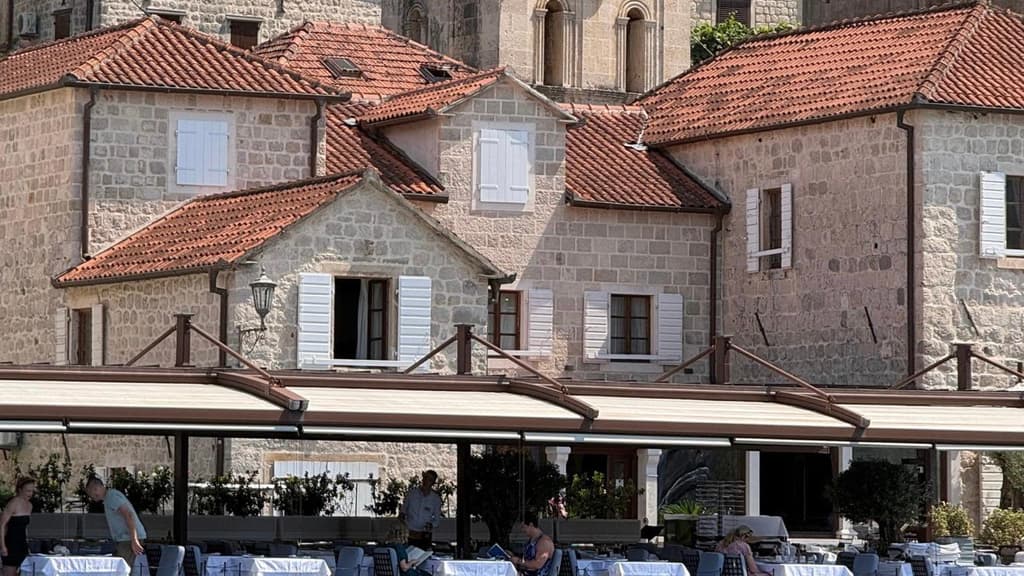
Back in Perast, the pale stone houses glow warm in the late afternoon, their red roofs stacked up the slope behind the waterfront. You settle on a shaded terrace by the water as the day-trippers drift away, and the bell of St Nicholas marks the hour over the bay. The Perast and Our Lady of the Rocks sunset tour brings you back across the water in that same soft evening light.
Perast: the town behind the shrine
You cannot separate the islet from Perast. In its heyday under Venice, this small town had a large merchant fleet, a shipyard, a nautical school and some 16 churches and 17 palaces for a few thousand people. Its captains were famous enough that Peter the Great sent young Russian nobles to study seamanship in Perast with the navigator Marko Martinović at the end of the 17th century. In 1654 Perast repelled an Ottoman attack, an episode still celebrated locally.
You can trace this history in the village. The things to do in Perast guide covers the Perast Museum in the Bujović Palace, St Nicholas Church with its 55-metre bell tower, and the baroque palaces along the waterfront.
St George, the neighbouring islet
St George (Sveti Đorđe) is the natural islet next door, covered in cypress trees. It held a Benedictine abbey from the Middle Ages and later served as a burial place for Perast’s notable families. Unlike Our Lady of the Rocks, it is closed to visitors. You see it from the water or from the quay of Our Lady of the Rocks.
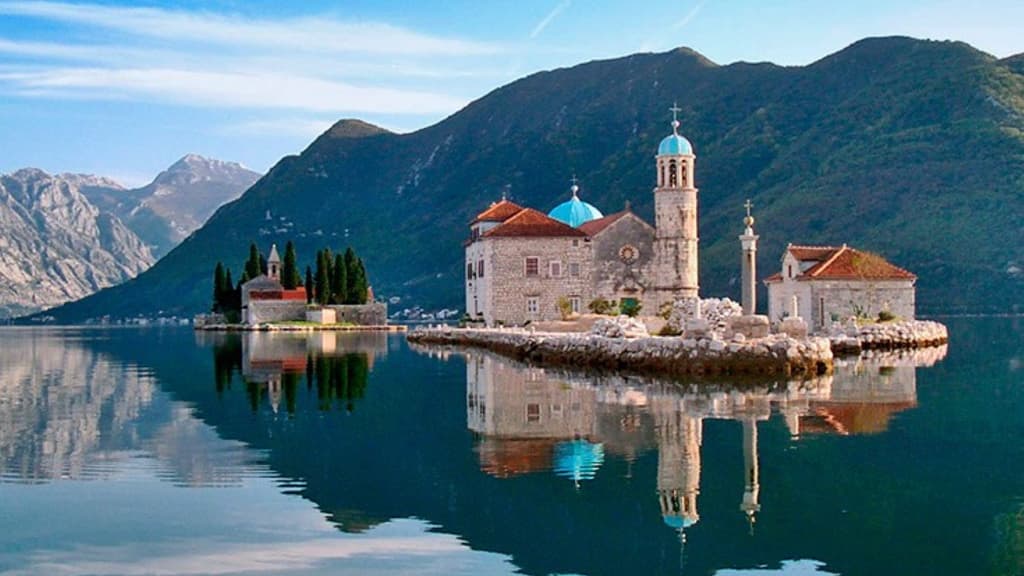 The two isletsFrom €68
Fašinada: the tradition that keeps building the island
Every year on 22 July, the anniversary of the icon’s discovery, the men of Perast tie their boats together and decorate them with greenery and flags. At sunset they row out in a convoy to the islet, singing traditional songs, and drop stones into the sea around it. The ritual has continued for centuries through wars and earthquakes. In 2013 Montenegro recognised it as part of its intangible cultural heritage.
- Who takes part: traditionally the men of Perast. Visitors watch from the waterfront or from boats.
- When to arrive: before sunset, as the waterfront fills up. A Mass and other celebrations take place on the day.
- Planning: 22 July is high season, so book accommodation early. See the best time to visit for more on summer crowds.
Seeing the history for yourself
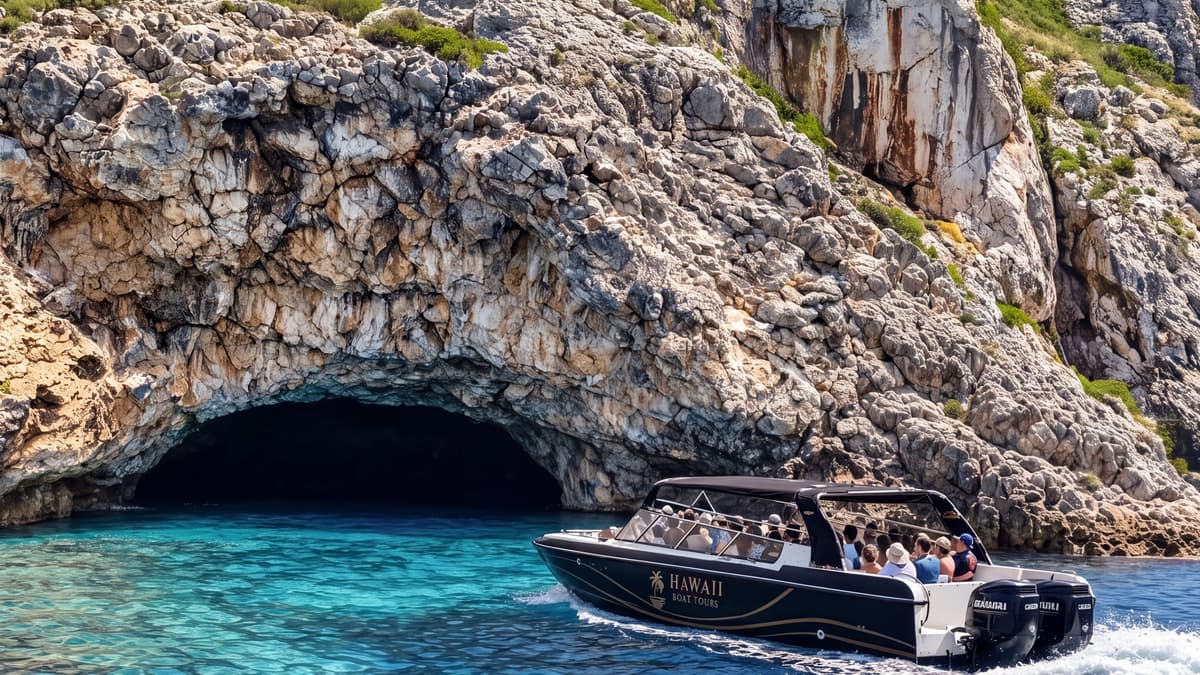
The boat taxi from Perast is the most direct way to visit. A short speedboat tour from Kotor also works well: the Perast & Our Lady of the Rocks Speedboat Tour (2h) is from about $33 (Oct 2026), rated 4.7 from 1,134 reviews. The Perast & Our Lady of the Rocks Sunset Tour is from about $40 (Oct 2026), rated 4.8 from 36 reviews. It catches the islet in the same evening light as the Fašinada convoy. If you want a swim as well, the Blue Cave, Submarine Base, and Lady of the Rocks Tour is from about $43 (Oct 2026), rated 4.8 from 5,104 reviews. Our Blue Cave tour guide explains how it works.
Find a tour to Our Lady of the Rocks
Ask for at least 30 minutes on the islet so you have time for the museum as well as the church. The silver votives and the embroidery are upstairs and easy to miss on a rushed stop.
Frequently asked questions
Is Our Lady of the Rocks a natural island?
No. It is artificial. Starting in the 15th century, the people of Perast built it up around a sea rock by dropping stones and sinking old ships filled with rocks. The neighbouring St George islet is natural.
When was the church of Our Lady of the Rocks built?
A first chapel stood on the islet in the 15th century, after the icon’s traditional discovery in 1452. The present church was built in the 1630s and renovated in 1722.
What is Fašinada?
Fašinada is the annual ritual on 22 July when the men of Perast row out at sunset in a convoy of tied-together boats and drop stones around the islet, re-enacting how it was built. It was declared Montenegrin intangible cultural heritage in 2013.
Who painted the pictures inside the church?
Most of the interior paintings, 68 in all, are by Tripo Kokolja (1661–1713), a Baroque painter from Perast. The icon on the altar is attributed to the 15th-century Kotor painter Lovro Dobričević.
What is the embroidery made with human hair?
It is an embroidered icon by Jacinta Kunić-Mijović of Perast, said to have been stitched over 25 years while she waited for her husband to return from sea. She used silk, gold and silver thread and strands of her own hair, which turn from brown to grey.
Can you visit St George island?
No. St George, the natural islet with the old Benedictine abbey and cypress trees, is closed to the public. The best views of it are from the quay of Our Lady of the Rocks.
More questions answered
FAQ · 9 min read
Our Lady of the Rocks & Blue Cave Tour (2026): Routes, Prices, Tips
Blue Cave and Our Lady of the Rocks boat tours from Kotor: the 3-hour route, prices from about $36 (Oct 2026), swim time, best light and how to choose.
Read the answers →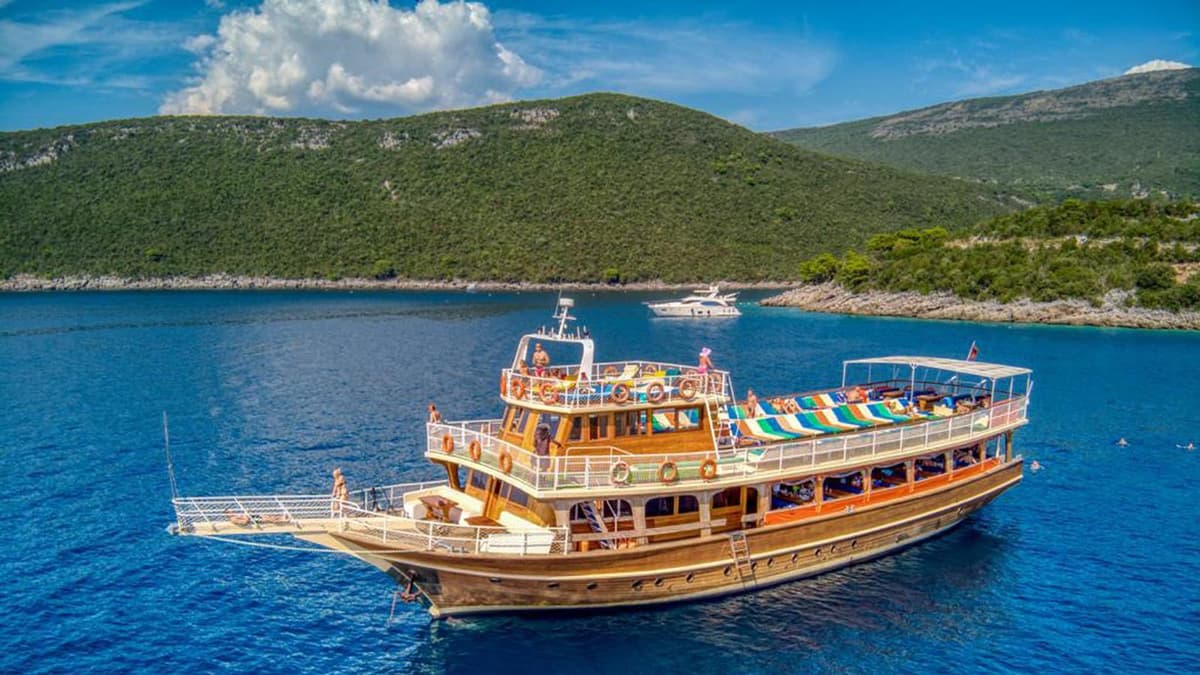
FAQ · 8 min read
Private Boat vs Group Tour in the Bay of Kotor (2026): Which Is Better?
Private boat or group tour in the Bay of Kotor? Compare prices, routes, crowds and comfort for Our Lady of the Rocks and Blue Cave trips, with per-person maths.
Read the answers →
FAQ · 10 min read
Things to Do in Kotor (2026): 12 Sights, Fees and Hours
The 12 best things to do in Kotor: Old Town gates, St Tryphon, the fortress climb, Ladder of Kotor, cats, boats to Perast, Blue Cave and Lovćen, with fees.
Read the answers →